Platform · CMS · Advisory

Webflow for nonprofits

Webflow can be an excellent visual CMS for marketing sites with tight design control. CauseHouse primarily builds WordPress and Next.js. This page explains when Webflow fits, where it struggles for nonprofit stacks, and how we help evaluate or migrate — without pretending we are a full-time Webflow studio.

Advisory page. CauseHouse primarily implements WordPress, Next.js, and the CRM/fundraising stacks listed across Platforms. This page helps you evaluate fit and migration — not a claim that we run a full-time implementation studio for every tool named here.

Best suited for

Where this platform earns its place.

  • Marketing sites with strong design ownership and lighter CRM complexity
  • Teams evaluating Webflow before committing capital
  • Orgs migrating from Webflow to WordPress or Next.js
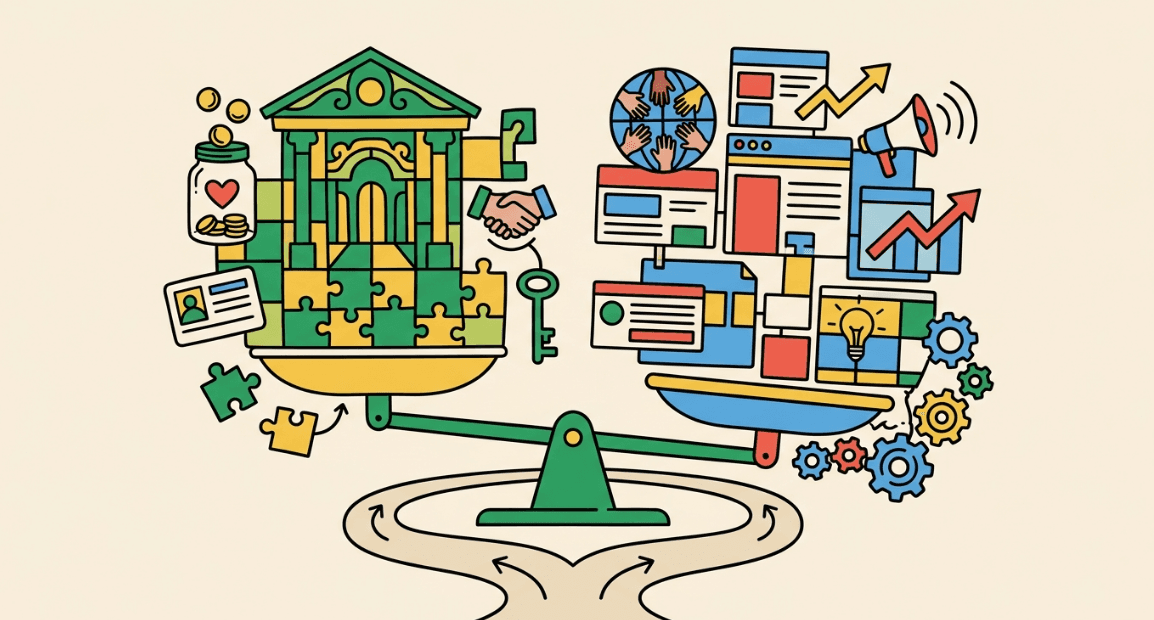
Balance scale weighing institutional systems against digital growth tools
In depth

How we think about this stack.

Where Webflow shines

Teams that want designer-grade control without fighting a theme framework often love Webflow. Hosting is bundled, the visual editor is strong, and brochure-style sites can launch cleanly. For organizations with light integration needs and a marketer who will own the Editor, Webflow is a legitimate option.

Where nonprofit complexity pushes back

Deep CRM wiring, complex donation suites, advocacy stacks, and multi-role publishing can get awkward. Embeds work until they do not. If your roadmap includes heavy Salesforce orchestration or frequent program microsites owned by non-designers, WordPress or a custom front end may create less friction over three years.

How CauseHouse engages

We help leadership compare Webflow vs WordPress honestly, plan migrations off Webflow into stacks we implement, and advise on accessibility and SEO risks during redesigns. If you need a long-term Webflow build partner, we will say so rather than stretch our practice.

Window looking into clearer reporting and visibility

Where it performs well

  • Visual design control and marketing landing pages
  • Hosted infrastructure with fewer self-managed servers

Common limitations

  • CauseHouse does not position itself as a primary Webflow implementation shop
  • Deep nonprofit integrations can be more friction than WordPress ecosystems
CauseHouse services

What we typically provide.

  • Platform fit advisory

    Honest comparison of Webflow vs WordPress/Next.js against CRM depth and staffing.

  • Migration planning off Webflow

    Content inventory, CMS collection mapping, and redesign scope into stacks we implement.

  • SEO & redirect strategy

    URL maps and Search Console checks so a move does not erase organic demand.

  • Accessibility risk review

    Keyboard, focus, and media gaps to budget before or during migration.

  • Integration reality check

    Donation, form, and CRM embeds assessed for friction before you commit capital.

  • Destination build coordination

    WordPress or Next.js delivery when Webflow is no longer the right long-term home.

Migration considerations

Export/import paths exist; CMS collections and CMS-driven routing need careful mapping. Treat SEO redirects as first-class scope.

Integrations

  • Embeds for donations and forms
  • API patterns that vary by use case

Accessibility

Webflow can produce accessible sites with discipline. Visual builders still need keyboard, focus, and media QA.

Common project mistakes

  • Choosing Webflow for design love while ignoring CRM integration depth
  • Assuming CauseHouse will fully staff Webflow forever without confirming scope
Questions

Before you standardize on a stack.

Will you build our entire site in Webflow?
Not as a default practice. We advise and migrate; long-term Webflow ownership usually needs a Webflow-focused partner.
Can you migrate us from Webflow?
Yes — into WordPress or Next.js with content, design, and redirect planning.
Start building

Ready to build a stronger house for your mission?